

The Two Palestines
Does ‘Palestine’ represent the oppressed, or a tiger justly confined to a cage?

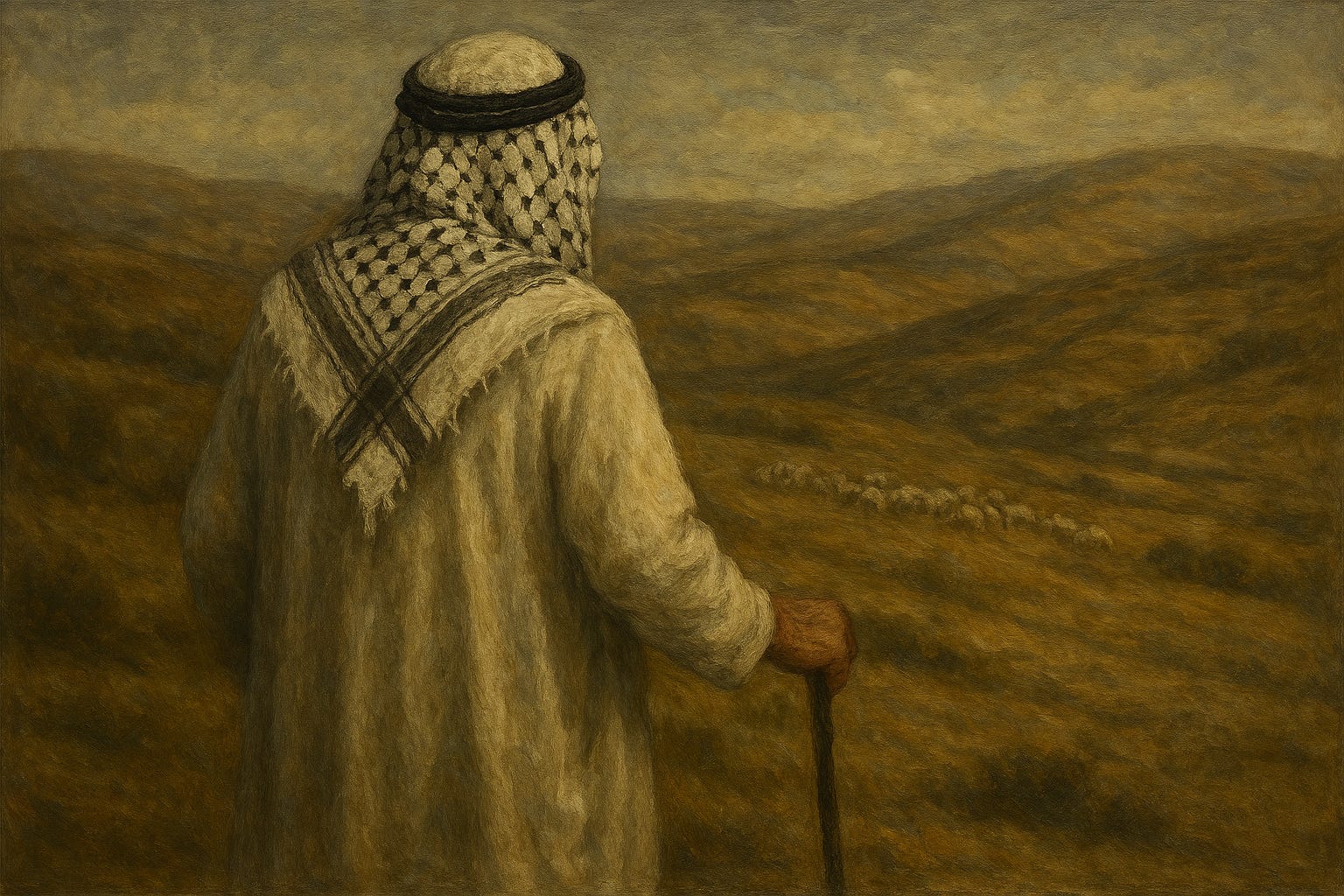
Are Palestinians an oppressed people, suffering under the yoke of the brute Israelis—or are they akin to a tiger in a cage, ready to attack helpless victims if just given an inch of freedom?
These are the two “images” one is essentially presented with by the opposite camps of the Israeli-Palestinian conflict. But if one had no prior knowledge of the subject, how could he know which of them is true, or at least closer to the truth?
Our ignorant outsider may agree that initiating the use of force against others is evil. Israel used the Hamas-led Oct. 7, 2023, massacre as a prime example of atrocious aggression. But Israel’s detractors claim that the conflict did not begin on Oct. 7. The neutral observer must then dive into the details of the complex history, leaving him unsure about which side is the initiator of force and which acts in self-defense.
If he seeks arguments that go beyond security concerns, he can find the claim that Palestinians were indigenous to Britain’s Mandatory Palestine, and that forming a Jewish state on “their land” constituted injustice. By contrast, the pro-Israel camp will say that Jews share a millennia-long connection to the Land of Israel, implying that the Palestinian cause pales in comparison.
But what these arguments amount to is that a right to statehood depends on ancestral presence on a piece of land—not on the kind of state that the involved groups wish to establish. The irony is that by accepting ancestral lineage as a standard for statehood, both camps concede the other party’s moral claim to a state (even if they deny it rhetorically). If both groups share ancestral histories on the same territory, deciding whose history is more legitimate is ultimately subjective, with each camp cherry-picking the ancestral details that favor its side of the argument; more importantly, the details serve as rationalizations to mask over the subjectivity of the debate.
The neutral observer is either resigned to accept perpetual conflict on a shared strip of land or to support compromise through territorial separation—a policy that has been tried for three decades with disastrous results. This takes us back to square one: should the Palestinians be freed from Israel’s military occupation with an independent state, or should Israel maintain its security apparatus as a defensive measure against Palestinian aggression?
A way out of this stasis is to look beyond ancestral claims.
Today’s wellbeing of Israelis and Palestinians does not depend on the whereabouts of their distant ancestors. It does depend, however, on their present-day institutions. Unlike collective ancestries, institutions have direct and observable influence on human flourishing, which serves as an objective standard for judging societies.
During the Enlightenment, the West adopted this approach to political issues after centuries of perpetual wars sparked by historic grievances. The West moved away from group history and focused instead on political standards such as the rule of law, due process, the division of powers, and most profoundly, a reverence for individual rights. What ensued was the peaceful existence of individuals within society, as well as peace between nations. This proved an objectively better system of government, empirically measured by the wellbeing of individuals.
A neutral can judge the Israeli-Palestinian conflict via these Western-based standards. Israel is a liberal democracy; its governing branches are separated; it respects the equal rights of its citizens, even if not absolutely (no state does today); opposition voices can be expressed freely; it is materially prosperous; technologically advanced; scientifically impressive; reveres education and the intellect.
By contrast, Palestinian society is ruled by a corrupt dictatorship in Judea and Samaria and a theocratic gang in Gaza; its “checks and balances” are decided with guns; it does not tolerate dissenting views or a free press; its citizens can be detained without trial and subjected to torture; its members are often persecuted for their sexual orientation, with women legally discriminated; it treats “honor killings” as socially acceptable; its GDP is one of the lowest in the world, while the foreign aid that Palestinians receive is among the highest per capita.
A person ignorant about the conflict need only learn that Palestinian society depends on international assistance to function at all and is routinely one step away from anarchy in Judea and Samaria. This individual can further learn that Palestinians have not engaged in serious attempts to extract force from their internal affairs, adopting the creed of “might makes right.”
Which of the above images is true then? Our neutral observer would have to conclude that Palestinian society is, if anything, oppressive from within—not oppressed. Metaphorically speaking, it is a tiger that preys on its own kin even before it attacks other animals.
For this reason, the famous quote attributed to former Israeli Prime Minister Golda Meir is not merely a rhetorical artifice but a direct shot at the essence of the conflict: “If the Arabs put down their weapons today, there would be no more violence. If the Jews put down their weapons today, there would be no more Israel.”
☞
If you value this newsletter, help spread the word by hitting the like button and sharing.
There´s even more to it: it is claimed that the "idea" of a defined "National State" should have been a "European"/ "Western" which allegedly had been wrongly implanted into the "Middle East". But this isn´t true:this "idea" exactly COMES FROM the "Middle East" which IS "the cradle of the `Western Culture´ you describe incl.a rightful justice system, individual rights etc.
- With the founding of The State of Israel, this idea has RETURNED to the "Middle East" ! While "Islam" can only strive for and accept "ONE people, ALL UNDER ALLAAAAAAAAH united in ISLAAAAAAAAAM".
THAT is what originally was absent in the "Middle East" and was forcedly put upon the multi-diverse ethnics of the Levante and "West Asia".
But facts such as these don´t appear in the "discussion".